Friday, May 03, 2013
Flaw in ABC Antony Green's Election Calculator
The Greens only won Melbourne in 2010 because the Liberal Party at the time preferenced them ahead of the ALP. A mistake they are unlikely repeat in September.
In 2010 the State Liberal party fearing a backlash from its supporters placed the Greens below the ALP this allowed then State ALP member Browyn Pike to hold on to the State Seat of Melbourne.
Without LNP preferences the the only way the Greens can hold on to the Seat of Melbourne is if ALP endorsed candidate Cath Bowtell polls third below the Greens and the Liberal Party after distribution of minor party candidates preferences. in which case Cath Bowtell's preferences will elect Adam Brandt.
LNP supporters will be conscious of this potential outcome and we will most likely see a repeat of the State By-election where LNP voters will fall behind Cath Bowtell in order to prevent the Greens from being re-elected.
All recent polls including the Essential Research Poll are showing a Statewide drop in Greens support which lends even more to the flaws in Antony Greens Calculations. You can not apply a statewide swing overall to a specific seat such as Melbourne where the 2PP contest is not between the LNP and the ALP.
UPDATE: It is clear that Antony Green has hard coded in the defeat of Independent seats as shown by this scenario on his calculator
Tuesday, February 12, 2013
Team Doyle Disenfranchised: Droop vs Pure Proportional voting
In the past the adoption of the Droop quota allowed us to reach a conclusion in the count without having to distribute preferences to the Nth degree and count every vote. However with the use of computer based technology this justification no longer applies.
Droop = x/(y+1)-1
Pure Proportional = x/y
By calculating the quota to be "x(/y+1)-1", as defined by Droop, we are ignoring up to a quota of voters which results in a large percentage of votes being locked up in what is referred to as the "wasted quota".
The effect of the Droop quota can be seen clearly by analyzing the 2012 City of Melbourne Council vote. In this case Team Doyle received around 38% of the vote and elected 3 positions with 8% of voters (Team Doyle's surplus) was ignored.
If the system was a pure proportional count the quota would have been 11.11% instead of 10% and the outcome of the election would have been more representative.
Under the Droop quota the Greens managed to elect 2 positions with just 14% of the primary vote and community candidate Kevin Chamberlin on 6% miss out being elected. If the count was pure proportional without the distortion of the Droop quota Kevin Chamberlin would have been elected with the support of Team Doyle’s surplus preferences.
Why should Team Doyle’s voters be disenfranchised and ignored by being lockup in the discarded quota, why should not the system be fully proportional and each vote of equal value. The current system using the Droop Quota at best can only be described as semi proportional.
The system using the Droop quota becomes even more distorted under the Victorian Local Government count-back rules as the vote that has been left on the table is not taken into account when calculating who or which candidate fills the casual vacancy.
The Victorian State Parliament Electoral Matters Committee to date has not scheduled a review of the Local Government elections, it is unclear if they will even though it is within their terms of references and they have an obligation to do so.
Will the Melbourne City Council take up this issue? Most likely not. The Greens benefited from the distortion in the proportionality of the count so they will not see any benefit in reform. The only team that did not was Team Doyle and Kevin Chamberlin. But the principle is clear if you believe in proportional representation then all votes should carry equal weight x/y is the purest means of calculating a quota not x/(y+1)-1
2012 City of Melbourne Primary Preference count (9 Councillors to be elected)
Saturday, September 11, 2010
Green and Bartlett in denial
The problem with the Senate system is that it was designed to facilitate a manual counting process. The method used to calculate the surplus transfer value is seriously flawed as a result.
Analysis of the 2007 Senate vote indicated that ALP Senator David Feeney could have lost his seat had One Nation preference the Liberal Party ahead of the ALP. Feeney would have lost not as a result of the voters intention but because the system used by the AEC delivered the Liberal/National Party an additional bonus of 7,000 votes.
The formulas used by the AEC divides a candidate's surplus by the number of ballot papers and does not take into consideration the value of the vote.
Analysis of the NSW ticket votes based on the output of ABC's Antony Green's Calculator shows that the Liberal National Party ticket vote increases in value by over 14,000 votes. In a close election 14,000 votes can make a big differences. the system is clearly flawed but no one is trying to fix it.
Disgraced former Queensland Democrat Senator, come failed Green Candidate for Brisbane , Andrew Bartlett, is in denial. Mr Bartlett claims the system is not flawed.
Clearly Mr Bartlett is not as well informed as he thinks he is (Too many stolen red wine bottles)
Electoral Analyst, Antony Green, wrote a paper in 2008 confirming our previous analysis of the 2007 Victorian Election. But even Antony Greens assessment and confirmation is not good enough for Mr Bartlett who still defends the indefensible current Senate voting system.
His blind support could have something to do with the fact that the Greens have been the beneficiary of the Liberal party's Bonus vote.
Andrew Bartlett does not understand how the vote is counted.
He could be forgiven in part, because Antony Greens Senate calculator is also misleading. The Green Calc does not list out in detail the method used in calculating the Surplus Transfer Values.
Antony Green use of terminology such as "Raw votes" and "votes" is also misleading.
Under AEC rules the Surplus Transfer value is calculated by dividing the value of a candidate's surplus by the number of ballot papers.
For the ill informed such as Andrew Bartlett this sounds reasonable but if your take the time to analyse and calculate the actual surplus transfer value you soon realise that the system is seriously flawed. the reason is simple. Not all votes that dorm part of a candidate's surplus are of the same value. Some are allocated at a fraction of value and others may be at full value. If you divide the surplus usually based on the number of ballot papers then you are in effect increasing that value of Major Party tickets votes at the expense of minor party primary votes.
If we are to restore confidence in the way the Senate vote is counted then we MUST ensure that the system is an accurate reflection of the voters expressed intention and is fully proportional not semi proportional.
As long as we have misinformed advocates such as Andrew Bartlett hope that the system will be fixed is not looking good
If we can not make the necessary changes and fix the system then we should abandon preferential proportional representation and adopt a party list system.
Missing from Antony Greens Calculator is the calculation of the surplus and the Surplus transfer value. Below is the calculations that demonstrate how the Senate system works
Data presented below is based on output published by Antony Green's Senate Calculator for the State of NSW 2010 Election
NSW
[Count 1: Initial allocation]
There are 1,584,909 Primary vote ballot papers each having a value of 1 allocated to the LNP #1 Candidate: Total vote 1,584,909
[Count 2: Concetta FIERRAVANTI-WELLS (Liberal/National) elected #1]
LNP #1 has a surplus of 1,584,909 - Quota (579,828)
= 1,005,081
Surplus Transfer value = (1,005,081 divided by 1,584,909 ballot papers) = 0.634156914
1,584,909 ballot papers are transferred to LNP #2 each ballot paper valued at 0.634156914, the total value = 1,005,081 (Above quota)
[Count 4: William HEFFERNAN (Liberal/National) elected #3]
LNP #2 now has a surplus of 1,005,081 - Quota (579,828)
= 425,253
Surplus Transfer value = (425,253 divided by 1,584,909 ballot papers) = 0.268313827
1,584,909 ballot papers are transferred to LNP #3 each ballot paper valued now at 0.268313827, the total value = 425,253 (Below Quota)
[Exclusion of candidate process]
OK. At this stage the data is the same (But Antony Greens calculator has not published the break down or the formula used in calculating the value of the transfer value and the number of ballot papers held by the candidate. This information is sadly hidden from view - Why is that?)
[The LNP #3 candidate picks up votes from the following exclusions]
[Count 7: Meg SAMPSON (Group K Independents) excluded]
313 Primary vote ballot papers are transferred at full value on the exclusion of Group K Ticket 1 of 3 Total number of ballot papers 1,584,909 @ 0.268313827 plus 313 ballot papers at full value of 1.00000: Total value of votes 425,566
[Count 18: Nick BEAMS (Socialist Equality Party) excluded]
1,199 Primary vote ballot papers are transferred at full value on the exclusion of Socialist Equality Party Ticket 2 of 3. Total number of ballot papers 1,586,421 @ 0.268313827 plus 1,512 ballot papers at full value of 1.00000: Total value of votes 426,765
[Count 28: Greg SWANE (Family First) excluded]
38,371 Primary vote ballot papers are transferred at full value on the exclusion of Family First. Total number of ballot papers 1,586,421 @ 0.268313827 plus 39,883 ballot papers at full value of 1.00000: Total value of votes 465,136
[Count 29: Fiona CLANCY (Australian Democrats) excluded]
5,609 Primary vote ballot papers are transferred at full value on the exclusion of Family First. Total number of ballot papers 1,586,421 @ 0.268313827 plus 45,492 ballot papers at full value of 1.00000: Total value of votes 470,745
[Count 31: Paul GREEN (Christian Democratic Party (Fred Nile Group)) excluded]
79,157 Primary vote ballot papers are transferred at full value on the exclusion of Christian Democratic Party (Fred Nile Group). Total number of ballot papers 1,586,421 @ 0.268313827 plus 124,649 ballot papers at full value of 1.00000: Total value of votes 549,902.
[Count 32: Jim Gerard MUIRHEAD (Shooters and Fishers) excluded]
95,292 Primary vote ballot papers are transferred at full value on the exclusion of Christian Democratic Party (Fred Nile Group). Total number of ballot papers 1,586,421 @ 0.268313827 plus 219,941 ballot papers at full value of 1.00000: Total value of votes 645,194. (LNP Candidate #3 elected)
[THE DISTORTION IN THE COUNT]
The LNP#3 Now has
1,804,850 ballot papers (1,005,081 valued at 0.268313827 (value 425,253)
plus 219,941 ballot papers full valued votes) Candidates Total Value 645,194
Candidates Total 645,194
1,005,081 ballot papers at 0.268313827 = 425,253 (65.91% of 645,194)
219,941 ballot papers at 1.00000 = 219,941 (34.09% of 645,194)
Surplus = 645,194 - Quota (579,828) = 65,366
Under the AEC rules the Surplus Transfer value is calculated by dividing the Surplus by the total number of ballot papers
65,366 divided by (1,005,081 + 219,941) = 0.03621686
The LNP ticket vote is worth the value of 57,400 votes (87.81%) of 65,366
The Primary Full value votes are now worth 79,66 votes (12.19%) 65,366
[The LNP ticket vote has increased its percentage of the Total value from 65.91% to 87.81%) and the Primary Full value votes have been devalued from 34.09% to 12.19%]
This represents a Bonus value of:
The LNP Ticket vote
65366 at 65.91% = 43,083
65366 at 87.81% = 57,400
A increase in value of 14,317
The Primary minor party full value vote
65366 at 34.09% = 43,083
65366 at 12.19% = 7,965
[Devalued by 14,317 votes]
14, 317 votes can be the difference in a close election.
This came about as a result of a FLAW in the way the vote is counted. A flaw that Mr Bartlett thinks does not exist. A flaw that inflated the Major Party Ticket vote at the expense of the minor party vote.
- A flaw in the way the vote is counted that should not exist.
- A flaw that needs to be corrected not hidden from view
- A flaw that some seek to hide and some who are ex members of parliament, ex Democrats. No Green Candidates think does not exist.
Saturday, February 10, 2007
VEC avoids accountability and disclosure Detailed results of the State Election missing
The Victorian Electoral Commission in administering the FOI request has possible breached the provisions of the Victorian Electoral Act and or Privacy Act. A complaint associated with the Victorian Electoral Commissions handling of the application has been forwarded tho The Victorian Privacy Commission for consideration and review.
Access to the information requested is still outstanding.
The Victorian Electoral Commission went to extra-ordinary length and considerable expense in printing out in hard copy most of the information that was provide as opposed to just copying the information and forwarding it in electronic format. Why? we fail to understand but I am sure a few more trees died in vein as a result. We accept no responsibility for the VEC actions in this respect as we had anticipated and expected that the information would be provided in electronic format. Some people would be forgiven in thinking that the VEC provided the information in hard copy format in order to prevent its distribution, collation and data analysis. That might not be far off the mark. It is difficult to say but efficient and cost saving it was not. As the information was sent to the wrong address we have requested that the VEC re-forward copies of their response in electronic format this time. Saving time and money.
The Victorian Electoral Commission had responded to the FOI request in part only they failed to provided copies of all the information requested.
Missing are:
Copies of below the line preference data was provided free of charge during the 1999, 2002 an 2004 Melbourne City Council Elections. This information is readily available and would be no more then 1mb for each electorate and would take approx. 2 mins to copy per file and this information should be published on the Victorian Electoral Commission's web site.
Without access to the below the line data files it is impossible to effectively scrutinise of verify the results of the election.
The below the line preference data is a public document and precedence has been set in a ruling of the Victorian Civil Appeals Tribunal requiring that this information be made available.
3. Copies of polling centers return summary results information for the legilsative Council (Upper-house) - similar information detailing polling place results in relation to lower house electorates was published by the VEC on their Internet web site.
The Victorian electoral commission has claimed that the cost of providing this information would be in excess of $600.00 which is very dubious and highly questionable.
The information is stored in electronic format and the cost of copying that information would be less then $2.00.
Polling place data for the Legislative Council is normally available and published on election night and updated through the count.
In the 2006 State Election the Victorian Electoral Commission failed to make this information available instead they only provided an electorate wide summary only. (The AEC provides senate results statistics broken down to polling places)
Access to the polling place summary data is fundamental in providing a check and balance as to the number of ballot papers issued and returned.
There were a number of substantial errors recorded during the conduct of the count of the Victorian State Election that had this information been readily available could have and should have been avoided. A quick summary of the polling place returns should have altered the Victorian Electoral Commission that a number of ballot papers had been missing or overstated prior to the distribution of any preferences. This information is still outstanding.
4. The Victorian Electoral Commission has provided limited information on the certification of software used to conduct the Victorian State Election count. Copies of certification certificates have been provided (but not yet received - due to the VEC mistake in addressing their response) for the electronic 'Kiosk' voting centres and the algorithm used in the calculation of the proportional representation results.
Missing is the detailed supporting certification documentation, reports and certification of the actual software related to the data-entry, front end, data storage and reporting software that utilises the algorithm used. Either the software used by the Victorian Electoral Commission has not been fully certified of the Victorian Electoral Commission has withheld access to this information.
In summary
The Victorian Electoral Commission again is seeking to avoid open and public disclose of the detailed results of the 2006 Victorian State Election.
A number of serious errors in the counting of the election have occurred and questions related to the discrepancy in the number of total votes record between the preliminary count and the recount in Western Metropolitan region have north been fully explained or verifiable based on the public documentation provided.
We are informed that copies of the below the line data files were not made available to scrutineers.
There is a discrepancy of over 450 ballot papers between the preliminary count and the recount. Without access to the polling place return data and the below the line preference data files, as requested, it is impossible to verify the results of the election .
It is fundamental that our public elections are open and transparent and subject to independent review and analysis.
With the utilisation of electronic computer based technology all relevant information and data files must be readily available to scrutineers and the public.
One can only ask
"WHY IS THE VICTORIAN ELECTORAL COMMISSION RELUCTANT TO MAKE THIS INFORMATION AVAILABLE THAT THEY ARE PREPARED TO GO TO SUCH EXTENTS TO AVOID DISCLOSURE AND ACCOUNTABILITY".
The actions of the Chief Electoral Commissioner and the Victorian Electoral Commission continues to bring 2006 Victorian State Election into disrepute.
Saturday, December 23, 2006
Tully's Tally doesn't Tally VEC's creative accounting under review
Victoria's Chief Commissioner, Steven Tully, is ultimately responsible for the stuff-up and many questions are being asked as to how this monumental stuff-up could occur.
Public Information and results doesn't tally
To help you gain some perspective into the extent of the stuff up take a look at the following summary statistics:
Summary of upper house statistics latest Data | |||||
| (published December 14, 2006 06:19) | |||||
| Region | Formal | Informal | Total | Updated | Difference |
| Eastern Metropolitan | 375947 | 12179 | 388126 | 12-12-2006 17:32 | 0 |
| Eastern Victoria | 379201 | 12625 | 391826 | 12-12-2006 18:55 | 0 |
| Northern Metropolitan | 360149 | 21730 | 381879 | 14-12-2006 06:19 | -6454 |
| Northern Victoria | 365391 | 15426 | 380817 | 12-12-2006 19:03 | 0 |
| South Eastern Metropolitan | 365547 | 20200 | 385747 | 12-12-2006 18:23 | 0 |
| Southern Metropolitan | 361805 | 11420 | 373225 | 12-12-2006 19:45 | 0 |
| Western Metropolitan | 374411 | 25075 | 399486 | 14-12-2006 03:57 | -478 |
| Western Victoria | 394478 | 14588 | 409066 | 14-12-2006 05:03 | 268 |
| Summary of upper house provisional count statistics | |||||
| (published December 12, 2006 19:45) | |||||
| Region | Formal | Informal | Total | ||
| Eastern Metropolitan | 375947 | 12179 | 388126 | 12-12-2006 17:32 | |
| Eastern Victoria | 379201 | 12625 | 391826 | 12-12-2006 18:55 | |
| Northern Metropolitan | 366605 | 21728 | 388333 | 12-12-2006 18:22 | |
| Northern Victoria | 365391 | 15426 | 380817 | 12-12-2006 19:03 | |
| South Eastern Metropolitan | 365547 | 20200 | 385747 | 12-12-2006 18:23 | |
| Southern Metropolitan | 361805 | 11420 | 373225 | 12-12-2006 19:45 | |
| Western Metropolitan | 374982 | 24981 | 399964 | 12-12-2006 18:03 | |
| Western Victoria | 394556 | 14242 | 408798 | 12-12-2006 17:31 | |
| Summary of upper house count statistics | |||||
| (published December 12, 2006 16:49) | |||||
| Region | Formal | Informal | Total | ||
| Eastern Metropolitan | 375390 | 12679 | 388069 | -57 | |
| Eastern Victoria | 378374 | 13030 | 391404 | -422 | |
| Northern Metropolitan | 358877 | 22496 | 381373 | -6960 | |
| Northern Victoria | 363962 | 16654 | 380616 | -201 | |
| South Eastern Metropolitan | 363814 | 21640 | 385454 | -293 | |
| Southern Metropolitan | 360202 | 13464 | 373666 | 441 | |
| Western Metropolitan | 373842 | 25773 | 399615 | -349 | |
| Western Victoria | 392893 | 15590 | 408483 | -315 | |
| Summary of lower house statistics | |||||
| (published December 12, 2006 16:49) | |||||
| Region | Formal | Informal | Total | ||
| Eastern Metropolitan | 372625 | 15588 | 388213 | 87 | |
| Eastern Victoria | 375024 | 16382 | 391406 | -420 | |
| Northern Metropolitan | 362715 | 20475 | 383190 | -5143 | |
| Northern Victoria | 365794 | 15520 | 381314 | 497 | |
| South Eastern Metropolitan | 366008 | 19631 | 385639 | -108 | |
| Southern Metropolitan | 361292 | 12378 | 373670 | 445 | |
| Western Metropolitan | 372518 | 25361 | 397879 | -2085 | |
| Western Victoria | 391684 | 16550 | 408234 | -564 |
At issue here is the number of total votes. Votes have gone missing and have not been accounted for. Normally all the number of ballot all papers are accounted. Each polling place returning officer is required to prepare a tally sheet that outlines exactly how many ballot papers have been issued.
The latest published summary information above shows to what extent the VEC stuffed up - Big time
A voter is supposed to be given two ballot papers, one for the lower-house and one for the upper-house. The number of lower-house ballots should match the number of upper-house ballots. The returning officer then includes this information in their return statements along with the number of ballot papers received and the number of unused ballot papers.
The electoral commission should have tallied up this information and ideally should know in advance prior to the final count how many ballot papers have been issued and how many have been returned. If there is a discrepancy then alarm bells should have rung. BUT this is not what has happened. The total number of ballot papers keep changing and the VEC failed to provide information that would have allowed a proper cross check to occur. (see previous posts on the VEC below).
There are still questions outstanding as to the accuracy of the poll and many believe that the VEC should be required to undertake a second recount in Western Victoria until they have at least managed to obtain the same overall result twice.
Steve Tully is under scrutiny with reports that many politicians, from all sides of the political divide, are not happy in with his performance and the way that he had conducted the election.
As previously reported "Tully's Tally" will come under review when the State Parliamentary Elections committee meets next year.
In the meantime Tully's team will be looking at undertaking some creative accounting to justify this stuff-up and hold on to their job. We think it is time to consider having a single independent professional Electoral Authority with Victoria's Chief Electoral Commissioner under the auspice of the Sate Auditor General and as an executive member of the new Australian Electoral Authority.
More information http://melbcity.topcities.com
Tuesday, December 19, 2006
Victorian Election results hidden from view VEC deny public access to detailed election results bring the State into disrepute
Earlier this week we saw the extraordinary situation were the VEC had overstated the Liberal Party vote and provisionally declared the wrong candidate elected. There was no excuse for this mistake. A comparison between the number of ballot papers issued and a tally of all formal and informal votes for each electorate should have alerted the VEC to the fatal mistake in the VEC data entry process. The VEC had earlier refused to provide statistical information related to the number of ballot papers issued and received prior and immediately following the November poll. Why? Details on the number of ballot papers issued by each polling place should have been made available on request and or published on the VEC Internet site.
It is fundamental that pubic elections are open and transparent and that information is readily available.
There are calls for the State Parliament to hold a parliamentary review of the Electoral commission and the mis-management associated with the conduct of the State Election. Responsibility for the VEC and State elections comes under the portfolio is Victoria's Attorney General Rob Hulls who is also responsible for the Freedom of Information Act.
The Chief Commissioner to date has refused to publish the detailed election results including the below-the-line preference data.
This information was previously made available in past elections but the Chief Electoral Commissioner, Steve Tully, following a multitude of errors and mismanagement of the conduct of the election has refused to publish the detailed election results in an attempt to avoid public scrutiny and review.
The continuing failure of the Chief Commissioner to ensure that Victoria's elections are open and transparent has brought Victoria and the State Government into disrepute.
Information and details of the election results are public documents and as such the public has a right to view this information. Mr Tully has no justification or reason to prevent their disclosure or publication other then his desire to avoid accountability and public review.
If need be we will soon make an FOI application to obtain access to this information and refer this matter to the State Ombudsman for review. The requirement to have to make an FOI application to gain access to what should reality be available to public is an direct abuse of the FOI requirements and something that should be of concern to Rob Hulls as Minister responsible for the FOI Act. The Minister should intervene and insist that the result are made published and made public without delay. Failure to do so would reflect poorly on the State Government and undermine it's commitment to open and transparent governance.
The Victorian public have a right to know where the VEC went wrong and what can be done to prevent the mistakes occurring again in the future.
Those wishing to view the flawed VEC count sheet for Northern and Western Metropolitan Regions (missing is the below the line preference data that the VEC has refused to make available) can view a copy here. (Thanks to the anonymous contributor that sent us the files)
Saturday, December 16, 2006
Tully's up and Tally goes astray Chief Electoral Commissioner oversees Victoria's biggest electoral management stuff up and avoids accountability
Steve Tully and the VEC had poorly managed the election and the VEC made a serious error in the data-entry of the ballot papers by over inflating the result of the election and the Liberal Party vote by 6,000 votes. Mr Tully subsequently provisionally declared that the last position of Western Metropolitan Region was won by the DLP lead candidate candidate, John Mulholland.
The fact remains is that had the VEC done its job properly this monumental stuff up would never have eventuated.
We had prior to the November election and immediately following the ballot requested information on the number of ballot papers that had been issued and received by the VEC. Information that the Chief Commissioner Steve Tully refused to provide. WHY?
Had this information been provided and accounted for, as requested, the Electoral Commission should have and would have known before they pressed the run button that there was a serious flaw in the VEC data-entry process. A quick tally of the number of primary votes and the number of informal ballots would have alerted the VEC that something was wrong . This is the exact reason why we had requested this information in the first place. In accounting terms it provides a trail balance, a check digit that ensures that all votes recorded are account for. In previous Victorian elections this information was previously available.
The fact that Mr Tully refused to provide this information, as requested, undermines the integrity of the election and prevented effective scrutiny of the ballot. It also raises questions as to the integrity of the software in use. The VEC has spent millions of dollars in software development and basic checks and balance were not in place to avoid the error that inventuated.
The problem is Steve Tully and his refusal to ensure that Victoria's electoral process is open and transparent. His refusal to provide information on the number of ballot papers issued and detailed eloection results can not be excused.
This election has been one the worst managed elections on record. The VEC still has not provided the details of the election results and electoral commission continues to refuse to make the details of the election results public. In doing so Mr Steve Tully continues to bring Victoria's State election into disrepute.
There is no excuse for the Chief Electoral Commissioner to not publish the detailed results, including the full count sheet and the transcribed below-the-line preference data files.
Without access to this information it is impossible for the electronic election results to be effectively scrutinised or verified, denying the public the right of independent review and analysis.
The detailed election results are a public document and legal precedence already exist requiring the electoral commission to make the data readily available for independent review and analysis. The VEC should and MUST publish this information on its web site without delay.
If necessary we will make an fresh Freedom of Information (FOI) application to ensure that the election results are readily available. The necessity of having to make a FOI application is itself an abuse of process and one that should be of concern to the Minister and State Attorney General, Rob Hulls, who is the Minister responsible for both FOI legislation and the conduct of the Victorian Electoral Commission. Mr Hulls office has been made aware of the deficiency in the VEC's management of the election.
The Chief Commissioner's actions and the identified problems with the conduct of the November State Election warrants a parliamentary review and the Mr Tully's resignation.
Tuesday, December 12, 2006
Thornley expected to win Southern Metro Latest data from the VEC limited reporting indicates The ALP will secure the fifth spot
Analysis details can be found here
For reasons not fully explained David Southwick, based on results published Monday December 11, showed, went backwards in the actual count and the ALP and Greens moved forward over the weekend.
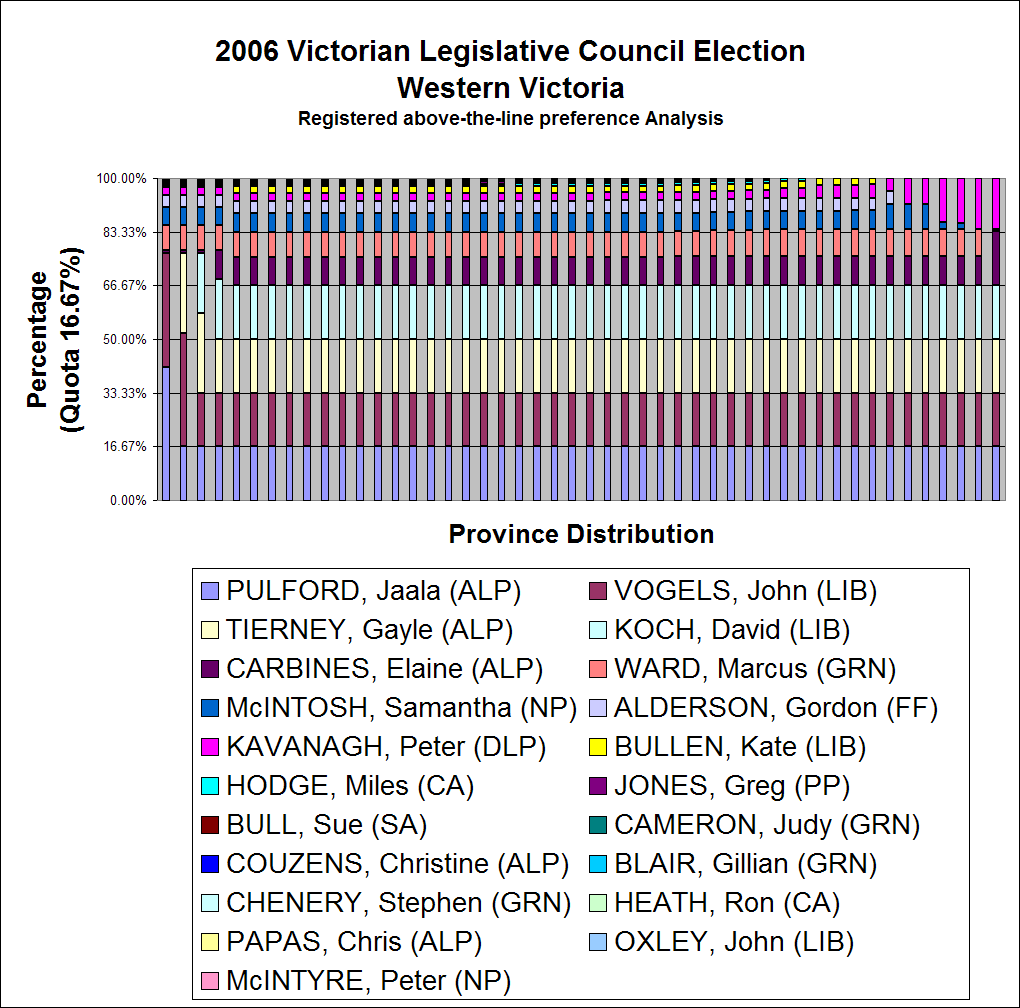
Counting in Western Victoria has the ALP below the Greens and the DLP who picked up minor party preferences above the National Party. As a result the fifth position in Western Victoria will go to the DLP with ALP Elaine Carbine missing out in being elected to the Victorian parliament.
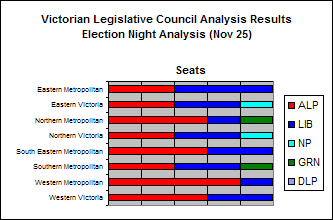
Labor will hold 20 seats, the Liberal Party 15, NP 2, Greens 2 and DLP 1.
Saturday, December 02, 2006
Who is John Barry Myers With Southern Metropolitan heading towards a photo finish every vote counts
Southern Metropolitan is shaping to create another historical election event for Victoria with the contest for the last two positions being a close race. A race between the Titans. The best analogy we can come up with is a Yacht race or maybe a long distance marathon. Much depends on who can maintain the momentum as the count continues and who cross the line first.
With an election this tight every vote counts and the two biggest issues are "where does the below-the-line vote go once it leaves the group associated with their first preference vote" and "Who is John Barry Myers" the unaligned independent candidate who is currently on a total of 245 votes.
With a margin of less the 50 votes John Myers's votes (as is the case of every other vote) will play a potentially significant role in the makeup and control of Victoria's future Parliament.
Heading to the courts
All ready we see the contest for Southern Metropolitan heading to the courts, as each main party starts documenting every aspect of the election in anticipation that who ever loses the election will mount a challenge in the courts.
Questions will be asked about the roles and conduct of the Victorian VEC, the lack of information, openness and transparency in the conduct of the election.
All these issues, including our concerns about the Victorian Electoral Commission staff accessing the result of the e-voting polling booth data prior to Saturday's poll (Something Mr Steve Tully, Chief Commissioner, has emphatically denied taking place in spite evidence to the contrary) along with concern about Mr Tully's refusal to provide relevant information to candidates, campaign managers, staff, scrutineers and members of the public in a timely fashion preventing appinted scrutineers and others from monitoring and properly scrutinising the conduct of the election. All issues will be subjected to judicial review.
This could be a repeat of the 1985 Nunawading challenge where Bob Ives was denied a seat in Parliament following a court ruling that called for the election to be rerun. If this was the case then all five positions would have to face re-election leave the ALP without its leader in the upper-house. This would depend on wheather a court injuction would prevent any candiadte form taking office pending the outcome of any court challenge in 1985 Bob Ives was allowed to take up his seat but soon lost it when teh court declared the results inconclusive and callwed for fresh elections. Maybe the losing side will opt to save the public millions of dollars in the cost of a legal challenge and the cost of having to hold fresh elections in Southern Metropolitan Region but that would be asking too much when so much is at stake.
It's too early to speculate with certainty on the immediate aftermath of the election result. The vote is still continuing and there are an estimated (No one seams to know exactly) 30-50,000 votes to be brought on the table (where from who knows certainly not the public). VEC's lack of openness and transparency in the conduct of this election has little to be desired.
Thursday, November 30, 2006
Southwick Heads South The Southern Metropolitan Region has just produced a change of fortune for ALP dot.com millionaire
At the crucial conjunction point the vote was ..
GRN 46863
ALP 46814
LIB 41714
FF 9696
DEM 9197
People Power had just been eliminated and they top up the Democrats who are marginally below Family First.
The Democrats votes flow to the Greens who on the Democrats ticket first preferences cross the line with minimal surplus. (This is the segmentation order at play) The Democrats still have another 4,387 votes to distribute (that came to it as second preferences + their below the line volts to their lower candidates). The Green surplus (256 votes) is then distributed to the ALP.
The Democrats remaining votes are then distributed to the ALP pushing Thornley over the line a head of Southwick. with a margin of less then 20 votes.
You begin to see how close this race is. Those 20 could easily disappear in the exhausted pile or drift from the below the line voters. The Democrats and People Power preferences are keeping the Greens in the race but Labor and the Liberals are catching up fast.
http://melbcity.topcities.com/ for latest analysis count sheet..

(November 30: 1700) Latest election counting has put David Southwick in the lead for the fifth spot in Southern Metropolitan: shattering ALP dot com millionaire Even Thornley's hopes of entering parliament and with t the ALP's dominance of both houses.
The long expected 7000 + postal votes have been counted and Southwick has received the lions share. It's literally with 0.04% less then 150 votes.
This will certainly go to a recount and may even go to court. There were a number of irregularities in the count with the Victorian Electoral Commissioner refusing to provide detailed information relevant to the conduct of the election. This would have to be one of the worst conducted counts in recent memory.
Already questions are being asked on a number of issues. The main issue appears dissatisfaction with the ALP decision to preselect a candidate in Western Metropolitan with close ties to Syria which has alienated Melbourne's Jewish Community who in turn dumped the ALP and voted on mass for the Liberal Party.
With the adoption of optional preferential voting Labor's fortune are expected to decline even further as many of the Green votes are expected to exhaust reducing Evans chance with them.
Update:
Andrew Landeryou has posted on the Other Cheek a real possibility that if the vote continues to unfold as it has in the last 24hrs ,where the Greens have been losing ground, there is realistic possibility that Evan Thornley could overtake the Greens and be elected on the back of a small surplus delivered to the ALP but the Liberal Party.
For each vote added to the table the quota changes. 2/3rds of each vote is absorbed in the existing four quotas.
Problem is we do not know how many ballot papers have been issued. We tried to get this information from the VEC but the Chief Electoral Commission was unable to unwilling to provide any statistics on the number of postal votes that had been issued. This information is normally readily available but for some reason Steve Tully refused to provide the data prior to Saturday's poll.
As a result it is difficult to ascertain. Certainly if there are more votes to be counted and the Greens percentage is declining then YES the Greens could lose out and could fall below Evan Thornley in which case Evan will cross the line first. Again its like walking around in the fog without necessary information. Another issue that needs to be examined is the impact of optional preferential voting. I am waiting to hear feedback from Scrutineers. Hopefully they will be able to secure a copy of the preference data file because without that there is no way they can properly scrutinise the election in this round without it. again this information use to be made available but Mr Tully has to date refused to make it available. With this election being close he will have to reconsider or face a court challenge.
Sunday, November 26, 2006
Upper Tally Victorian Legislative Council Election
Change of fortune as predicted Southwick head South and takes the lead by the slimest of margins less then 150 votes and still counting (Click Here)
Click here for our latest analysis count datasheet details
UPDATE: (Monday November 27, 8:00PM)
Further analysis of the results as published by the VEC at 5:3OPM Monday November 27 indicates that postal, absentee and below the line votes will play a crucial role in the outcome of Western Victoria with a strong possibility of the DLP with the assistance of Family First could win the firth seat as as such deny the ALP absolute control in the Legislative Council. Other possible contenders are the National Party.
Latest fugars available indicate that the ALP may pull ahead of the Green vote which will mean the ALP wins the fifth spot and a third seat giving it absolute control of the legislative Council. Its a sea-saw close race with five competitors competing to the finish line.
All depends on the outcome of the race between Family First and the DLP, the National Party and the DLP, and the Greens and the ALP. There are thee main conjunction points that exist in the count and the result could tip either way.
It is difficult to make any accurate assessment due to the refusal of the Chief Commissioner Steve Tully to ensure that the counting of the election is open and transparent and subject to detailed independent analysis. His refusal to provide postal vote, absentee and prepolling statistics on the number of votes issued and the failure of the VEC to provide detailed polling both data further complicates independent analysis leaving many candidates and campaign managers in the dark. Akin to driving around Australia with a word map and no idea of the scale or distance. There are also issues with the data-entry/data quality of the VEC data with an additional space omitted in the DLP group name.
With the results of the election determined by computers it is essential that this information and details of the recorded preference allocations are readily available and that our election system is open and transparent. Mr Tully's refusal to provide this information, as requested, in a timely fashion brings the conduct of state election count into disrepute.
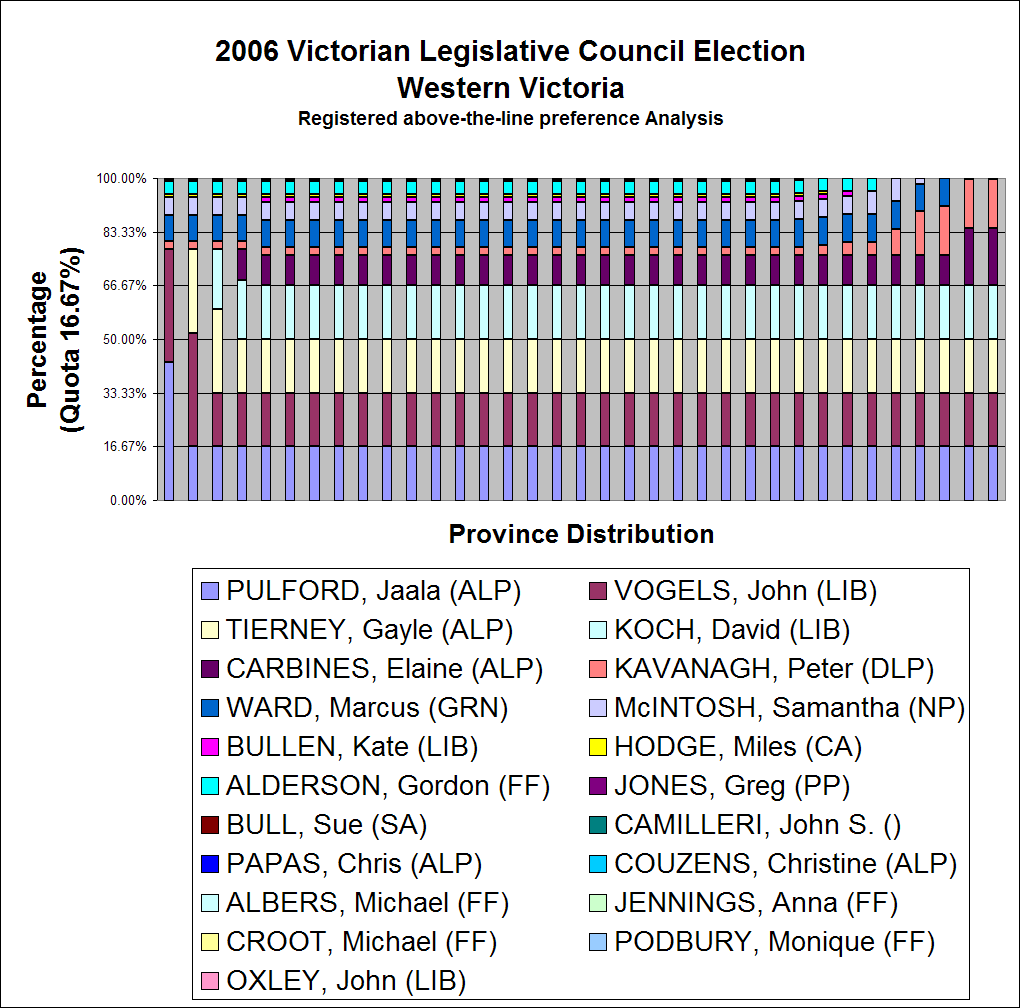
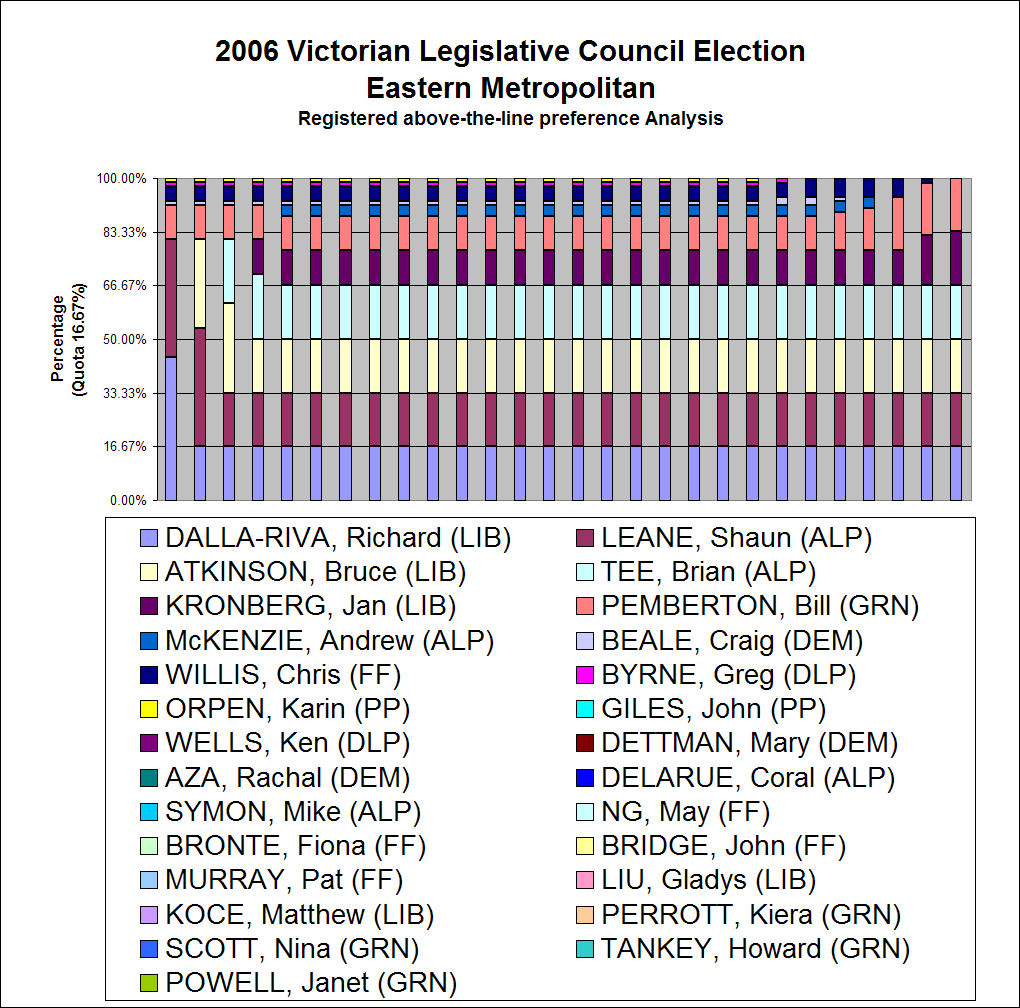
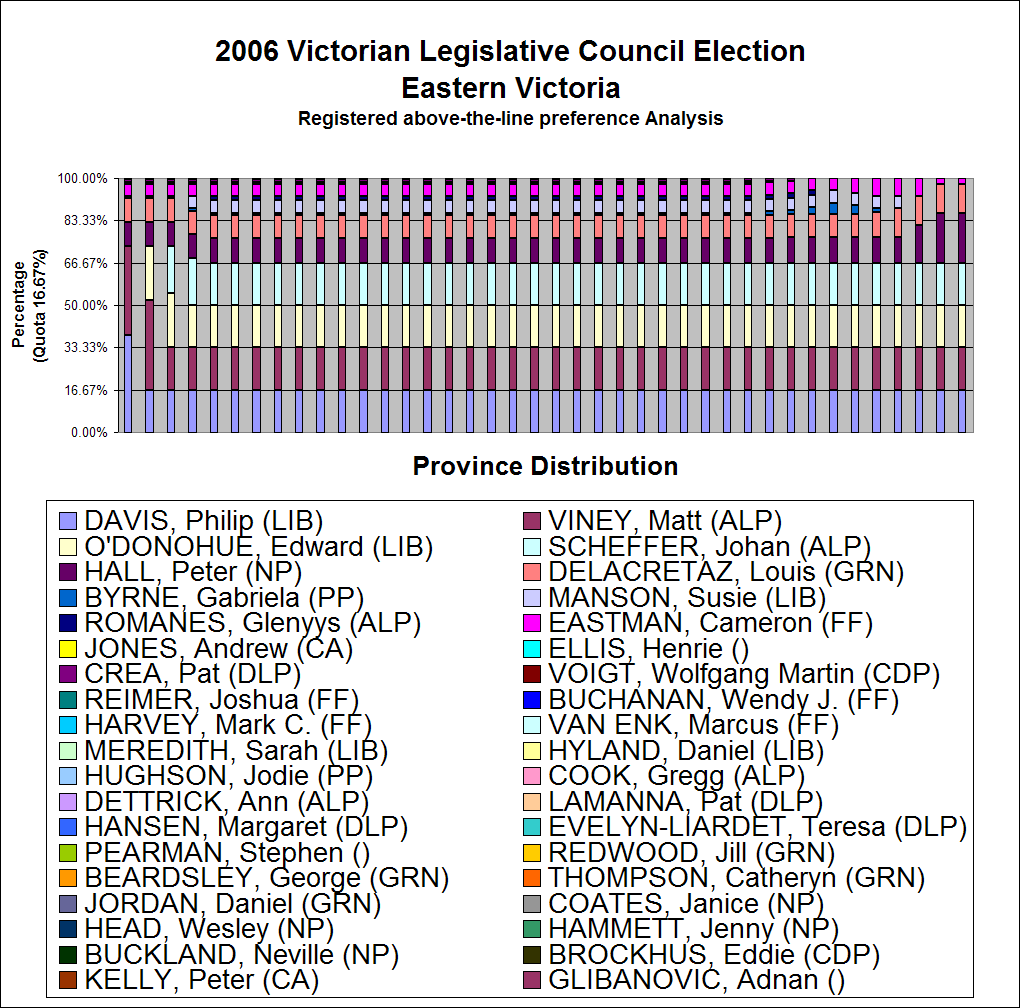
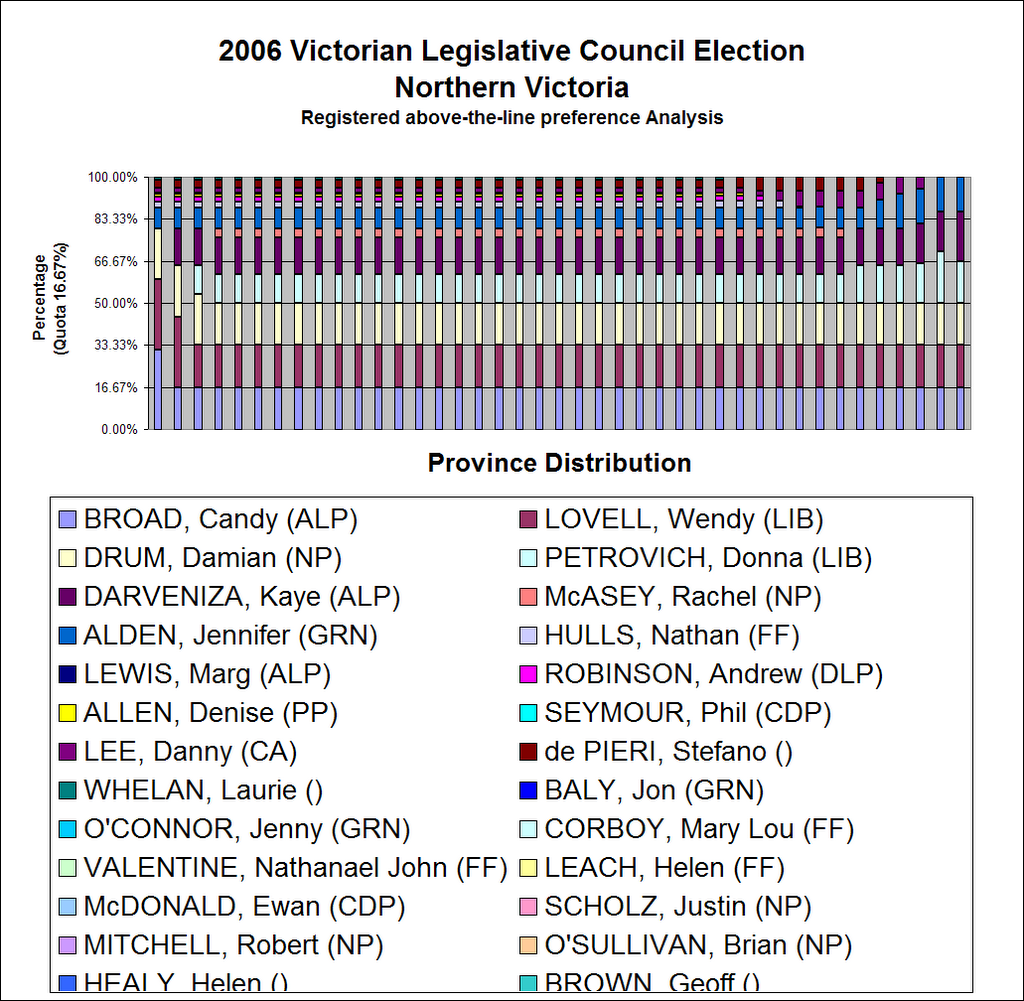
Attached below is a the latest theoretical distribution of below the line preferences.

Analysis of the Summary Results of the Upper-House election.

The following results of Saturday's count produced interesting reading as the results unfolded.
At one stage in the counting process it looked as though the Greens were going to lose all seats but as the count progressed the Greens, aided by People Power and Democrat feeders, crept across the line in two seats only (Southern and Northern Metro). Recent poll results have recorded a strong vote for Labor and the Liberals in Western and Eastern Metropolitan seats respectively. The gap has widened and with most of the vote counted it is difficult to see any change. As most of the parties have pretty much the same below the line vote it is difficult for any of the parties to bride that gap which is over 2,000 votes.
The election process was marred by the Chief Commissioner, Mr Steve Tully, who refused to provide information on the number of postal ballot papers that had been issued for each district. This information is normally available and provides an indication of what is outstanding and whether or not it will effect the results of the election. without this information there is no way knowing if that all illusive bundle of 50 votes will appear.
Mr Tully in spite numerous requests refused to make this important information available. WHY? Not having access to this basic information is akin to holding an election and not knowing the total number enrolled. If you do not know what has been issue how do you know what's missing.
This information is normally made available prior to the election postal vote applications closed on Thursday night. As a result of Mr Tully's refusal he left scrutineers of Monday nights count in the dark not knowing vital information as to whether or not Bronwyn Pike was elected or not. Bronwyn according to the VEC 2CP count was on a 1.5% margin similar to the 2002 election result but without knowing the number of postal votes that has been issued and the number of absentee votes yet to come in, she was left wanting.
The VEC’s conduct of the count of the election was certainly left wanting and raises question why do we need to 2 electoral commissions, the VEC and the AEC, this duplication is a waste of limited public resources. The web VEC’s site service was also inadequate with detailed information related to polling pace results not readily made available.
Further there were additional concerns that the Chief Commissioner and VEC staff had undertaken a, possibly illegal, preliminary early count of the results of the election recorded at electronic polling booths. If this is true then there are a number of questions outstanding in regards to the VEC’s rights to undertake a preliminary count of the election results prior to the close of the poll on Saturday night in the absence of scrutineers. If not resolved soon this issue will be subject to review by the Victorian Civil Appeals Tribunal and with the Chief Commissioner and staff called on to give evidence as to the conduct of the election with a report being made to the State Parliament.
Mr Tully has denied and refuted the advice provided by Glenda Fraser, Manager of Election Services, who in an email forward to the Media on Friday indicated that the Commission had in fact undertaken a count and analysis of first preference and 2CP results of votes recorded on the VEC electronic voting system. Quote: “After analysing the number of voting centre results entered last night for 1st prefs (District and Region) and 2 CP we have realised that everyone could be waiting around all night for what would be dribs and drabs that we do not anticipate would make an impact on the result” If it turns out that this account is true and the preliminary count was illegal then Mr Tully should resign or be sacked. A decision to sack Mr Tully would need to be made by the Victorian State Parliament.
Results of of the close of early this morning (Sunday November 26)
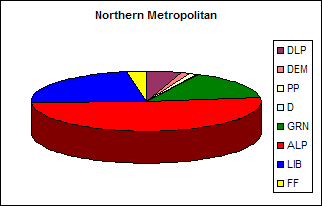
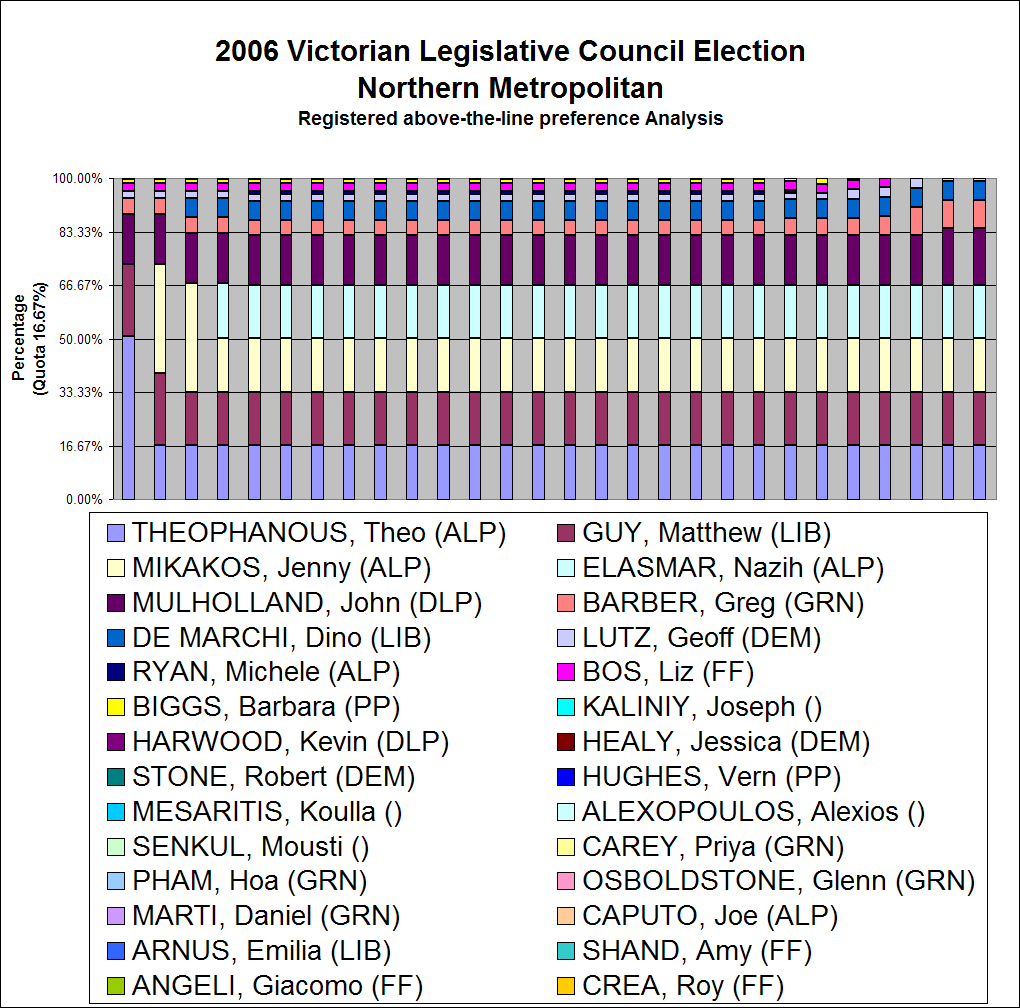
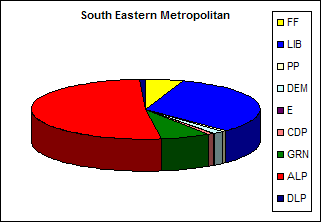
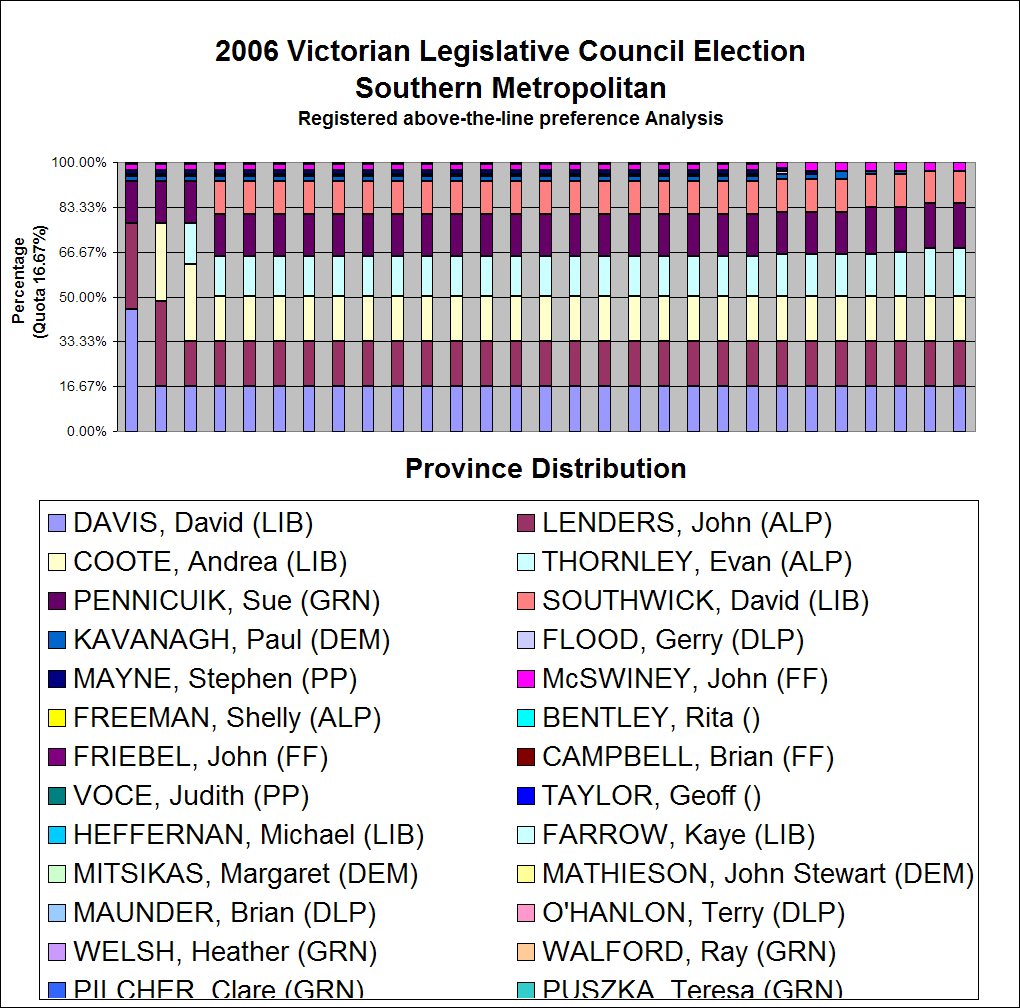
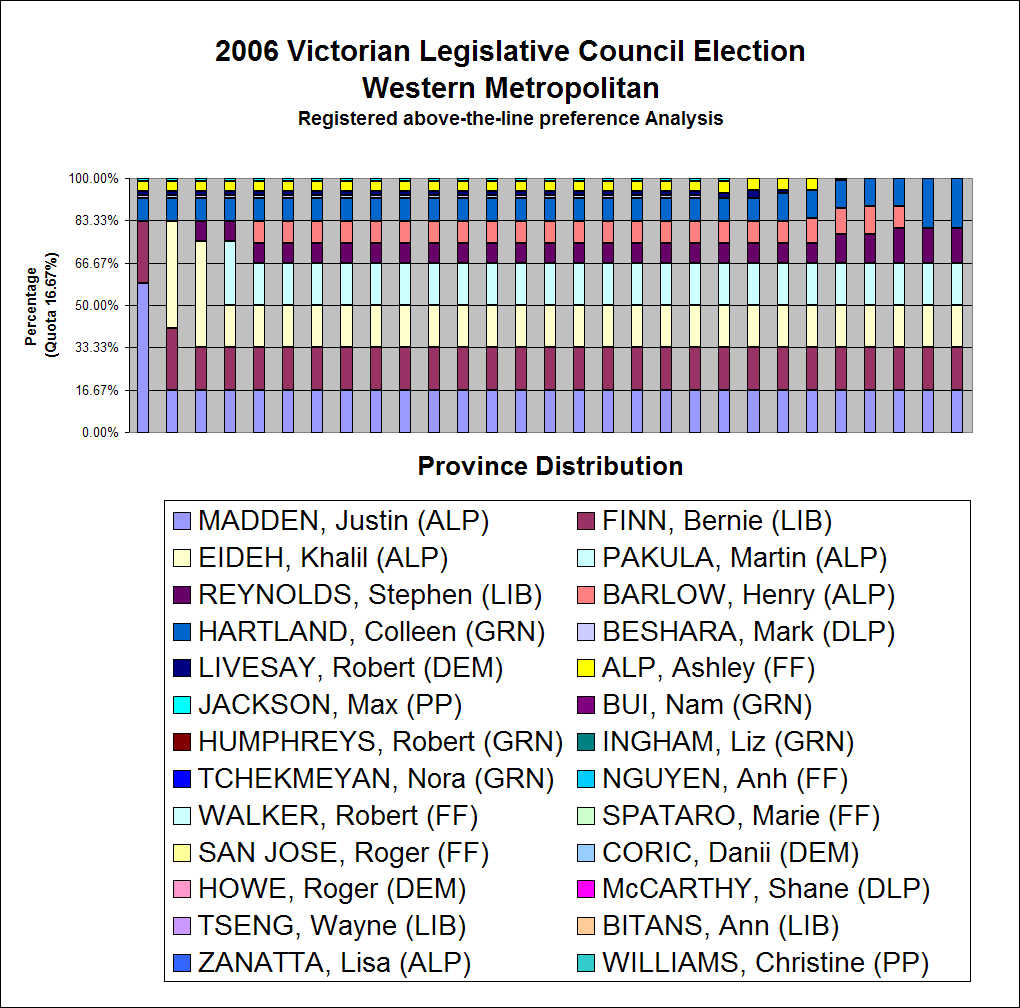
Metropolitan Seats (Click on the graphs below to view a larger version)


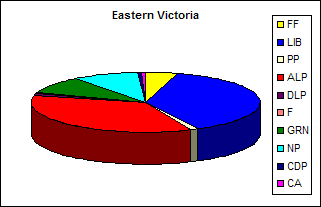
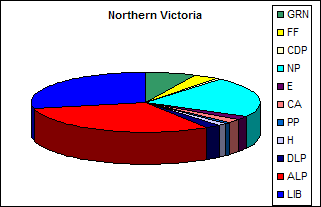
Rural Victoria
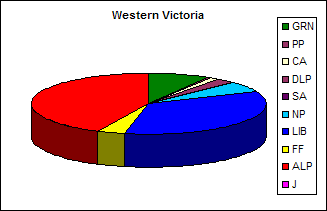
Note: See above for updated distribution graph. The ALP is currently ahead of the Greens in the count which could see it win the fifth spot and absolute control of the upper house.